A Better Glass of Water: Why an Under-Sink RO System Can Make Sense
 Admin
Published
DeskHome Services
Admin
Published
DeskHome Services
There’s something oddly satisfying about filling a glass straight from the kitchen tap. No carrying bottles, no trips to the store, no plastic containers piling up in the recycling bin. Just turn the handle and drink.
Of course, many homeowners want a little more confidence in what’s coming out of that tap. Maybe the water has a noticeable taste. Perhaps there are concerns about dissolved minerals or other substances. Or maybe the family simply prefers the taste of treated water.
That’s where an under-sink reverse osmosis system can be useful. It doesn’t have to be a dramatic home upgrade. In many cases, it’s a fairly practical way to give the water used for drinking and cooking an additional treatment step.
What Makes an Under-Sink System Different?
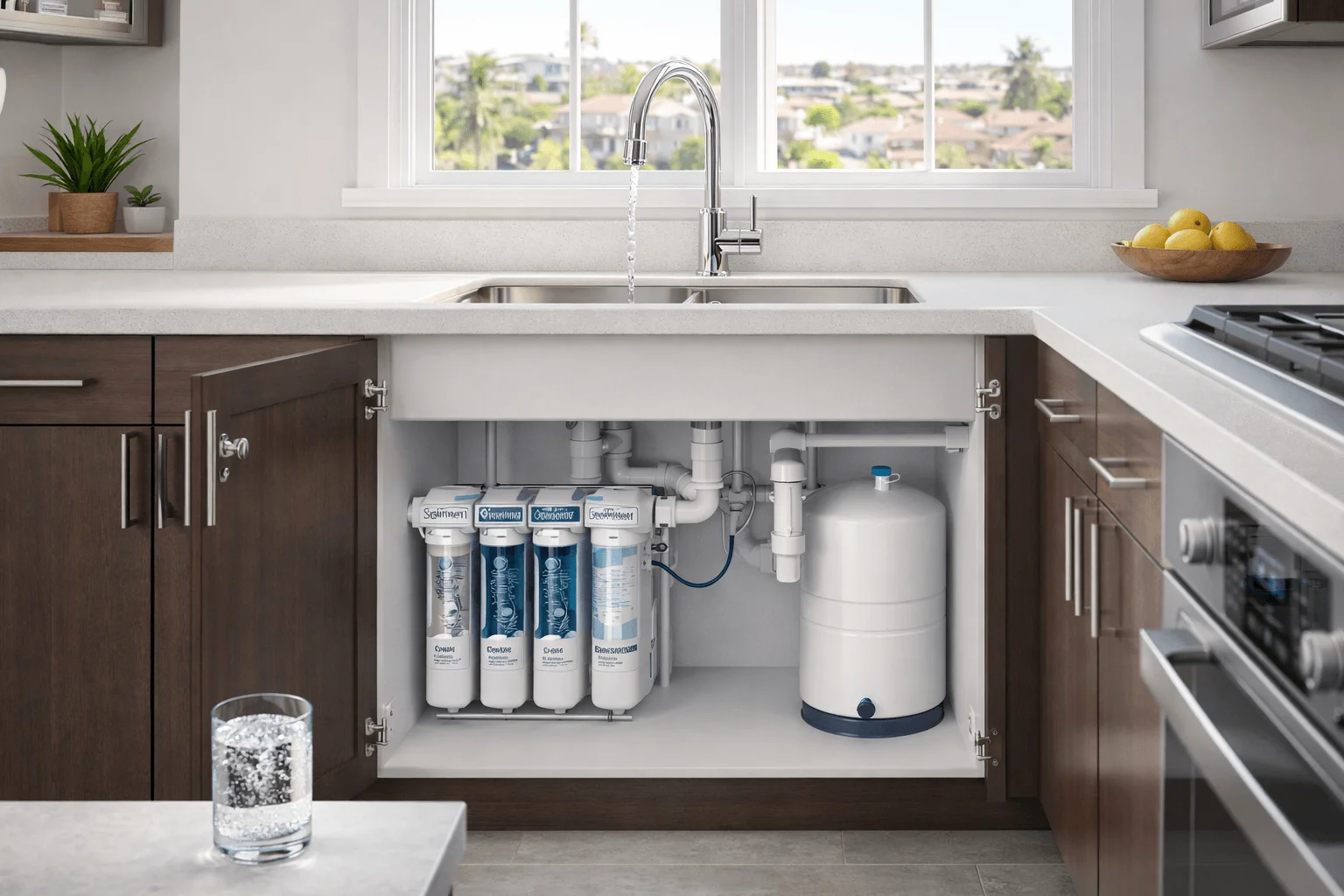
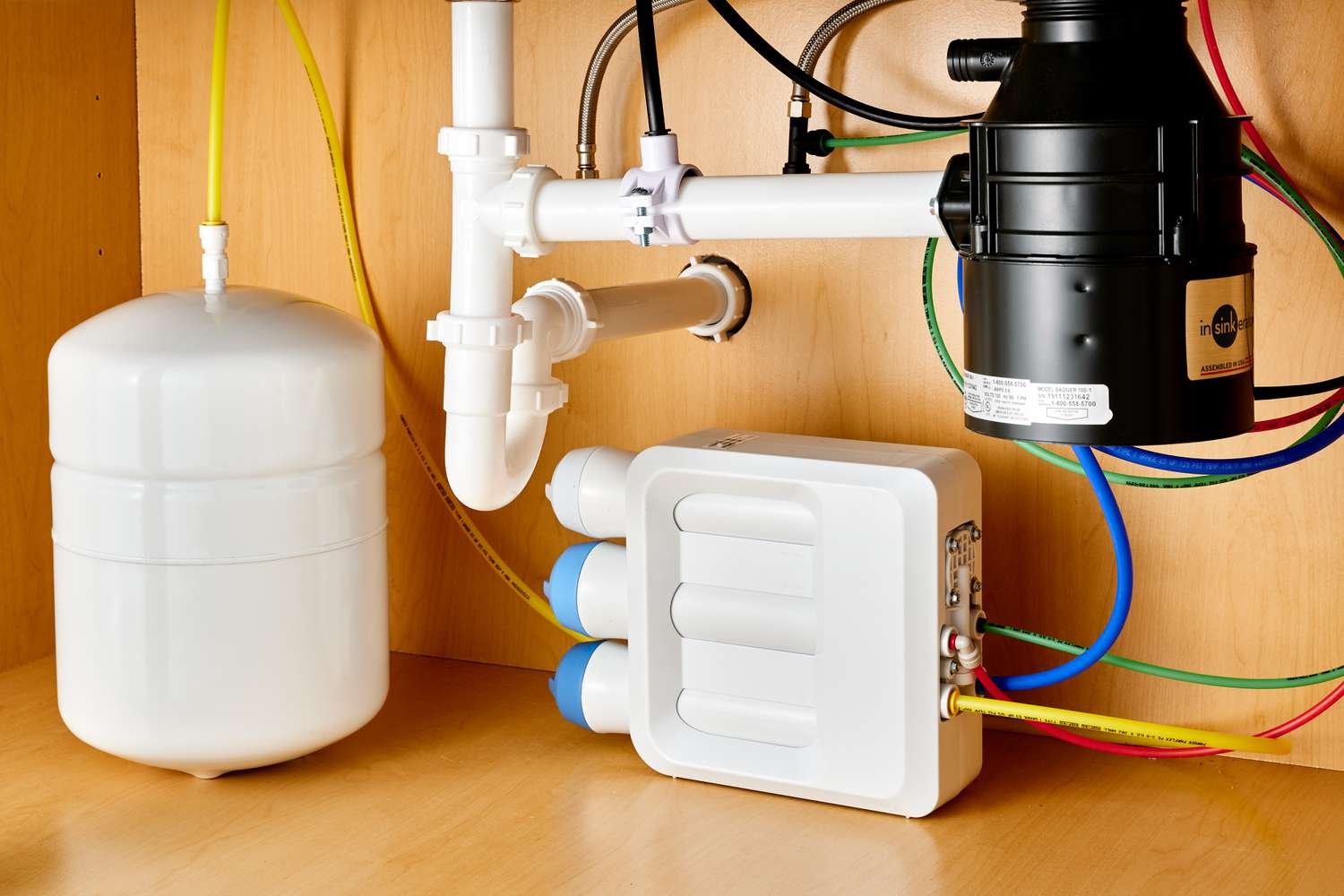
An under sink reverse osmosis system is installed beneath the kitchen counter and typically connects to a dedicated drinking-water faucet.
Unlike a whole-house treatment system, it focuses on a specific point of use. That’s actually one of its biggest advantages.
You aren’t necessarily treating every gallon of water used for showers, laundry, and cleaning. Instead, you’re concentrating treatment where drinking and cooking happen.
For a household primarily concerned about kitchen water, that can be a sensible approach.
How Reverse Osmosis Works
Reverse osmosis uses pressure to move water through a specialized membrane. The membrane allows water molecules through while reducing many dissolved substances and impurities.
Most household systems use several stages rather than relying on the membrane alone. Pre-filters can help protect the membrane, while a post-filter may improve taste before the water reaches the faucet.
The exact configuration varies from one system to another, so it’s worth checking the specifications rather than assuming every RO unit performs identically.
It sounds technical, but the basic idea is pretty straightforward: water passes through multiple treatment stages before reaching your glass.
Why People Choose Purified Water
Taste is often the first thing homeowners notice.
Purified water may taste cleaner or more neutral than untreated tap water, particularly when the original water has noticeable chlorine, mineral, or other flavor characteristics.
That can make a difference for people who drink water throughout the day. It can also affect cooking. Coffee, tea, soups, and other foods contain plenty of water, so the quality of that water can influence the final result.
Of course, taste is personal. What one person describes as perfectly refreshing, another may find slightly unpleasant. That’s one reason testing and understanding your existing water can be useful before choosing a treatment system.
A Good Choice for Drinking and Cooking
An under-sink RO system is particularly convenient for households that want treated water without installing equipment throughout the property.
The dedicated faucet provides quick access when you’re filling a bottle, cooking rice, making coffee, or preparing baby formula where appropriate.
It also keeps treated water separate from the home’s general plumbing.
That can be helpful because not every household water concern requires whole-house treatment. If the main goal is improving the water your family consumes, a point-of-use system may be enough.
What an RO System Doesn’t Replace
It’s important not to expect one system to solve every water issue.
If your home has hard water, for example, reverse osmosis at the kitchen sink won’t necessarily prevent scale from developing on bathroom faucets or inside the water heater.
Similarly, if there is a broader plumbing or water-source concern, an under-sink system may not address it.
This is where overall water treatment planning becomes important. Different technologies are designed for different jobs, and sometimes they work best together.
A water softener may address hardness, while a drinking-water RO system focuses on the kitchen. The right combination depends on your actual water conditions.
Water Testing Should Come First
Before purchasing equipment, consider testing your water.
A test can provide useful information about hardness, dissolved substances, chlorine, iron, and other characteristics. For homes using private wells, testing can be especially valuable because groundwater conditions can vary.
The results can help determine whether reverse osmosis makes sense and what additional treatment, if any, might be appropriate.
This approach also helps avoid buying equipment simply because it has impressive features.
More technology isn’t automatically better. Appropriate technology is better.
Maintenance Is Part of the Package
One thing homeowners sometimes overlook is maintenance.
RO systems use filters and membranes that need replacement according to their usage and manufacturer recommendations. Waiting until the water tastes strange isn’t the best maintenance strategy.
Keep track of filter changes and watch for signs such as reduced flow, unusual taste, or changes in water production.
The system doesn’t need constant attention, but it does need occasional attention.
Think of it like changing the oil in your car. You don’t think about it every day, but ignoring it isn’t a great long-term strategy.
Consider Water Waste and Efficiency
Traditional reverse osmosis systems can send some water to the drain during the treatment process. The exact amount varies depending on system design, water pressure, temperature, and other factors.
If conservation is important to your household, look for systems with improved efficiency and clear information about water recovery.
A slightly more efficient system can be worthwhile over years of use, particularly in a household that consumes a lot of treated water.
Choosing the Right System
Don’t choose an RO system based only on the initial price.
Look at filter replacement costs, membrane life, installation requirements, water efficiency, storage capacity, and warranty information.
Consider how much treated water your household actually uses. A family of five with heavy kitchen use may have different requirements from a person living alone.
The best system is one that fits your water, your habits, and your budget.
A Small Upgrade With Everyday Benefits
An under-sink reverse osmosis system isn’t a magic answer to every water problem. But for households that want convenient treated water at the kitchen sink, it can be a practical option.
Start with testing. Understand your water. Decide what you want to improve, and then choose equipment designed for that purpose.
The result doesn’t have to feel complicated. It can simply mean turning on the kitchen faucet, filling a glass, and knowing that the water you’re using has gone through the treatment process you intentionally chose.
Sometimes, that’s exactly the kind of home improvement that makes sense—quiet, useful, and part of everyday life.