
SEO Services UK: What British Businesses Should Actually Demand from an Agency in 2026
 Admin
Published
Updated DeskTechnology
Admin
Published
Updated DeskTechnology
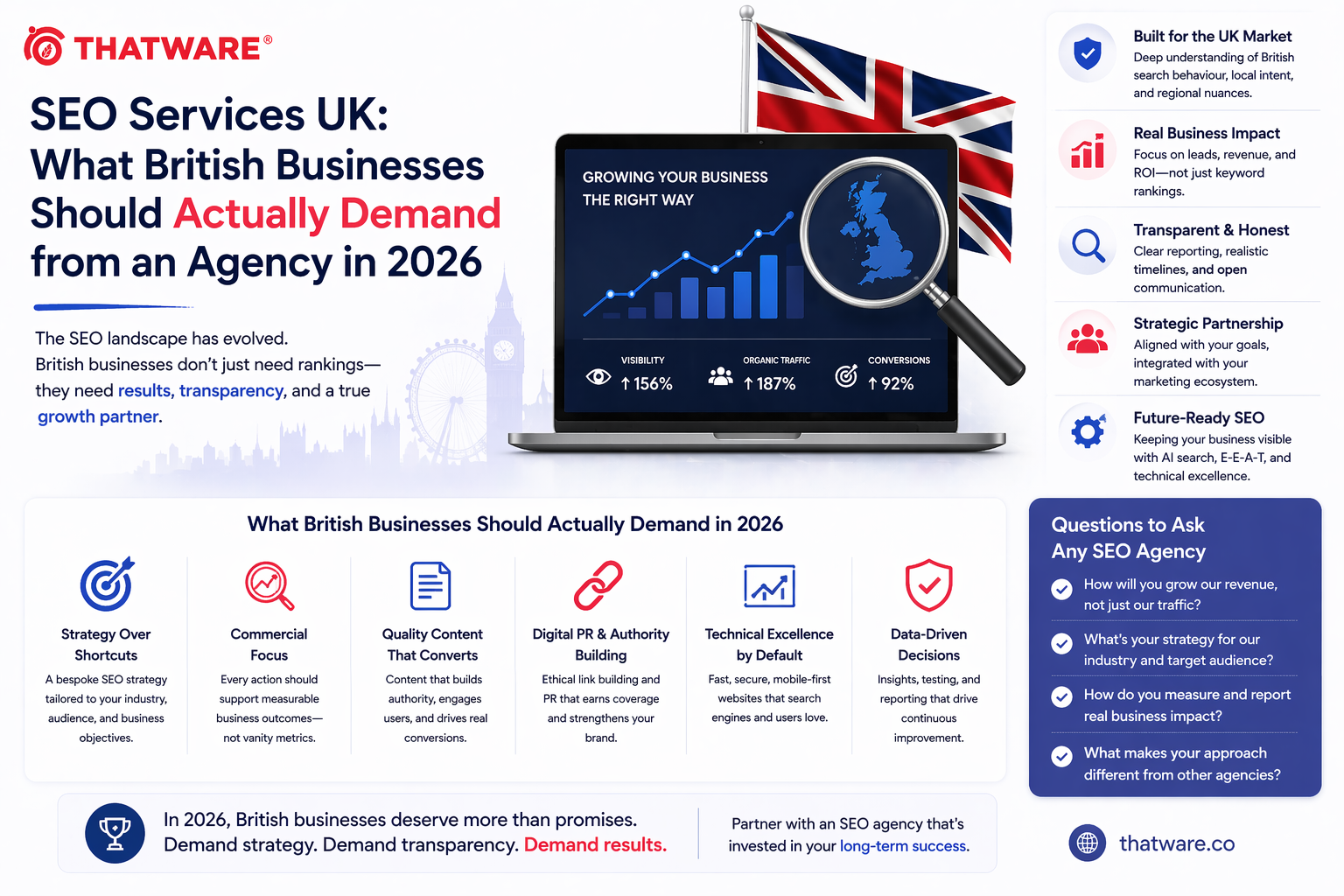
British businesses have a complicated relationship with digital marketing agencies. There’s a long tradition of polite dissatisfaction – clients who aren’t entirely happy with their SEO results but don’t want to make a fuss, agencies that deliver mediocre work confident that the client won’t push back hard. It’s a dynamic that serves nobody well.
The antidote is having clear standards for what good SEO looks like in 2026 – and being willing to hold agencies to them.
The UK Market Has Specific Characteristics
SEO in the UK has some distinctive features that matter for strategy. The dominance of Google is even more pronounced than in the US – Bing and other alternatives have less market share, which means Google algorithm developments matter even more. The regional variation within the UK – English, Scottish, Welsh, and Northern Irish market differences – matters for local and regional businesses in ways that generic strategies often miss.
The UK also has some of the world’s most competitive search verticals. Financial services, legal, insurance, property – these markets have been bitterly contested in organic search for years, and the level of sophistication required to compete is correspondingly high.
What British Businesses Should Be Asking
First question: do you have experience in my specific market and competitive environment? A generic SEO agency that’s never operated in UK financial services or UK property isn’t going to have the competitive intelligence that comes from having fought those battles before. Vertical expertise matters in the UK because the competitive landscape varies so dramatically between sectors.
Second question: how do you approach the technical audit? The UK has a lot of established businesses with legacy website infrastructure – CMS platforms that are years old, site architectures built when SEO best practices were different. A thorough technical audit that goes beyond surface issues is foundational.
Third question: how do you build authority in the UK market specifically? Link building, PR, and digital authority in the UK require relationships and knowledge of the UK media landscape. Seo services uk that are genuinely effective have UK-specific authority-building capabilities, not generic outreach strategies that could be applied anywhere.
The E-A-T Question in a Post-HCU World
Google’s Helpful Content Updates have changed what quality looks like for UK businesses, as they have everywhere. But the UK market has some specific implications. In sectors like finance and health – highly regulated industries where the UK has strong professional standards – demonstrating genuine expertise and authoritativeness has become absolutely central to ranking.
Content produced by or in close collaboration with genuine UK-regulated professionals performs better than generic content that gestures at expertise. Agencies that understand this are building content strategies around real expertise signals – author credentials, regulatory compliance context, clear professional voice. Agencies that don’t understand it are still producing keyword-optimized content that increasingly fails to rank in SERP for these sectors.
International vs. Local Focus
UK businesses operating internationally face specific hreflang and international SEO challenges that require careful handling. The relationship between .co.uk, .com, and international subdomain/subdirectory structure has real implications for which market a page ranks in. Botching international SEO can mean ranking in the wrong geography entirely.
For businesses that operate only in the UK, local and regional targeting has become more sophisticated. Google’s ability to return regionally relevant results has improved. A seo company uk that understands how to properly signal geographic relevance – through content, citations, structured data, and UX signals – will outperform one applying generic national targeting.
Reporting Standards
British clients, in my experience, tend to under-demand from reporting. Monthly PDF reports with keyword ranking tables and traffic graphs are not enough. Good SEO reporting connects activity to business outcomes – leads, revenue, pipeline, brand search growth – and explains the strategic reasoning behind priority decisions.
Demand reporting that includes: what we did this month and why, what we learned from the results, what we’re doing next month and the strategic logic behind it, and how our activity is moving the metrics that matter to your business. Agencies that can produce this kind of reporting have a genuine grasp of strategy. Agencies that can’t are executing a checklist.
The 2026 Landscape Specifically
UK search in 2026 has AI Overviews appearing on a meaningful percentage of queries. Voice search penetration is significant. Generative AI tools are being used by British consumers to research purchases in ways that bypass traditional search entirely. Agencies that haven’t adapted their strategy for this landscape are going to produce diminishing returns.
Ask prospective agencies how they’re thinking about visibility in AI-generated search results, not just traditional rankings. The ones with a coherent, evolving answer are positioned for where things are going. The ones who look blank are already behind.